ODI Fantasy Cricket Guide: How to Pick Your XI for India vs New Zealand
Five India vs New Zealand ODIs start on 4 November, and a 50-over match rewards different players from a T20. This fantasy cricket guide explains what changes in ODI team building, how to treat anchors, spinners and all-rounders, and how to choose a captain, using the coming series as the example.
Last updated 31 October 2026. Published sources describe the India and New Zealand squads differently, so this guide does not list players. Confirm the playing XI on match day. This is analysis, not a prediction.
What changes from T20 to ODI
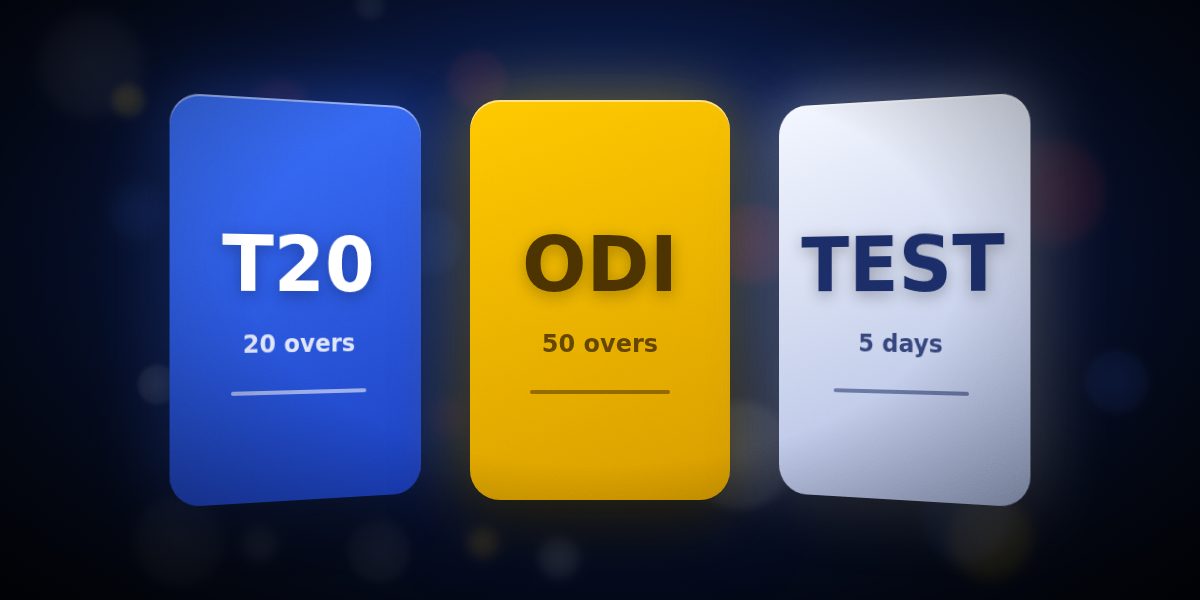
In a T20, a batter facing 20 balls can change your score. In an ODI, an innings of 50 or 60 balls is normal, and a batter who gets in can bat for most of the innings. That shifts the value towards batters who play a long role, and towards bowlers who get long spells. Points rules differ between contests, so read the scoring table before you pick, but the roles below hold in most formats.
| Factor | T20 | ODI |
|---|---|---|
| Overs per side | 20 | 50 |
| Max overs per bowler | 4 | 10 |
| Best batting role | Openers and power-hitters | Top-order anchors and a finisher |
| Bowling value | Powerplay and death specialists | Middle-overs spinners and wicket-taking seamers |
| Risk of a low score | High for every batter | Lower for set top-order batters |
The series at a glance
The BCCI and other schedules list five ODIs, each with a 7:30 am IST start. Because the start is early in India, check the team news before the toss.
| Match | Date (2026) | Venue |
|---|---|---|
| 1st ODI | Wed 4 November | Eden Park, Auckland |
| 2nd ODI | Sat 7 November | Wellington |
| 3rd ODI | Tue 10 November | Seddon Park, Hamilton |
| 4th ODI | Fri 13 November | Bay Oval, Tauranga (Mount Maunganui) |
| 5th ODI | Sun 15 November | Bay Oval, Tauranga (Mount Maunganui) |
Reports say both teams are using different squads for the first three and last two matches, and that Tests follow from 19 November. Our India vs New Zealand ODI preview covers the schedule in more detail. Because a squad can change, treat the series as two short blocks and rebuild your team for each one.
Pick role by role
Top-order batters. Start with the openers and the number three. In an ODI they face the new ball and often bat deep into the innings, so they have the most chances to score. Compare their recent roles, not their reputation.
Wicketkeeper. A keeper who bats in the top five is worth a premium over one who bats at seven. Check the batting order once the XI is out.
All-rounders. An all-rounder who both bats in the top six and bowls a full quota is the most useful player in a 50-over contest, because points can come from two skills. One who bowls only a few overs is closer to a batter, so price him that way.
Spinners. The middle overs, roughly 11 to 40, are where spinners earn wickets. Pitches differ, so check the pitch report before spending on a spinner. If the surface is flat, a fast bowler who takes wickets early may be the better use of credits.
Seamers. Pace bowlers who bowl in the powerplay and again at the end can collect wickets in two phases. In cooler New Zealand conditions, early swing can matter, but treat that as something to confirm from the toss and the pitch report, not as a rule.
Choosing a captain and vice-captain
The captain and vice-captain earn bonus points in most contests, so these two choices can matter more than any other. A simple ODI method is to choose a captain with the longest likely time on the field: an opener, a number three or a front-line all-rounder. Avoid choosing a player only because of fame. If you want a longer explanation, read how captain choices work in the T20 picks guide, and adapt it to 50 overs.
A pre-lock checklist
- Open the official team news and confirm who is in the XI.
- Check the batting order, especially the keeper and the all-rounders.
- Read the pitch and weather notes for the ground.
- Spread your credits across roles instead of paying for two or three stars.
- Pick a captain whose role is clear, and a vice-captain with a different role.
- Keep an eye on workloads, because Tests follow the ODIs.
For the full method see our team-building strategy. If you are new, start with the beginner’s guide, and if you cannot sign in, use the fantasy cricket login help. Play responsibly. drem is a free fantasy cricket game for adults aged 18 and over, and no result is guaranteed.
FAQ
How is ODI fantasy cricket different from T20?
An ODI gives each side 50 overs, so batters have time to build an innings and bowlers can bowl up to ten overs. Players who stay in for a long time, and spinners or seamers who bowl through the middle overs, usually matter more than in T20. Always read the points table of the contest you join.
When is the first India vs New Zealand ODI?
The first ODI is scheduled for Wednesday 4 November 2026 at Eden Park, Auckland, with a listed start of 7:30 am IST. Five ODIs are planned, ending on 15 November. Check the official match centre for any change.
Should I wait for the toss before locking my team?
Where the contest allows it, yes. The toss and the confirmed XI show who is actually playing, and a squad name is not a guarantee of a place. Teams can rest players, especially when other matches follow.
Is drem free to play?
Yes. drem is a free fantasy cricket game for adults aged 18 and over. No result is guaranteed, so play responsibly.
Sources
- India vs New Zealand 2026 full schedule, venues and fixtures (Outlook India)
- India squad for New Zealand ODI series 2026 (Yahoo Sports)
- India’s ODI and Test squads for New Zealand tour announced (BCCI)
Related reading
- Rain-hit ODIs and fantasy cricket: DLS, short games and washouts: What rain changes for your XI.
- India vs New Zealand 3rd ODI preview: Hamilton, rain risk and fantasy angles.
- India vs New Zealand 2nd ODI preview: Wellington, 7 November.
- New Zealand ODI squad changes: Injuries and what they mean for fantasy picks.
- India vs NZ 1st ODI preview: Eden Park squads, pitch and fantasy angles.
- India vs New Zealand ODI series preview: Dates and the series context.
- Build a balanced XI: Roles, conditions and credits.
- T20 fantasy cricket picks guide: The T20 checklist to compare against.
- drem FAQ: Answers on the free game.
- India vs New Zealand Test series fantasy guide: Squads and Test XI tips.
Build your ODI XI
Play the free fantasy cricket game on drem.com once the teams are confirmed. 18+ only.